Have you noticed how every coding interview, every course, every roadmap keeps talking about DSA? DSA is genuinely important, and today you're going to learn what it actually means, in the simplest way possible.
Let's start with data structures.
What are data structures?
Data structures are just ways to organise and store data. Simple as that.
Say you have 5 data to store. Do you store all in one variable? No, you use an array to store it.
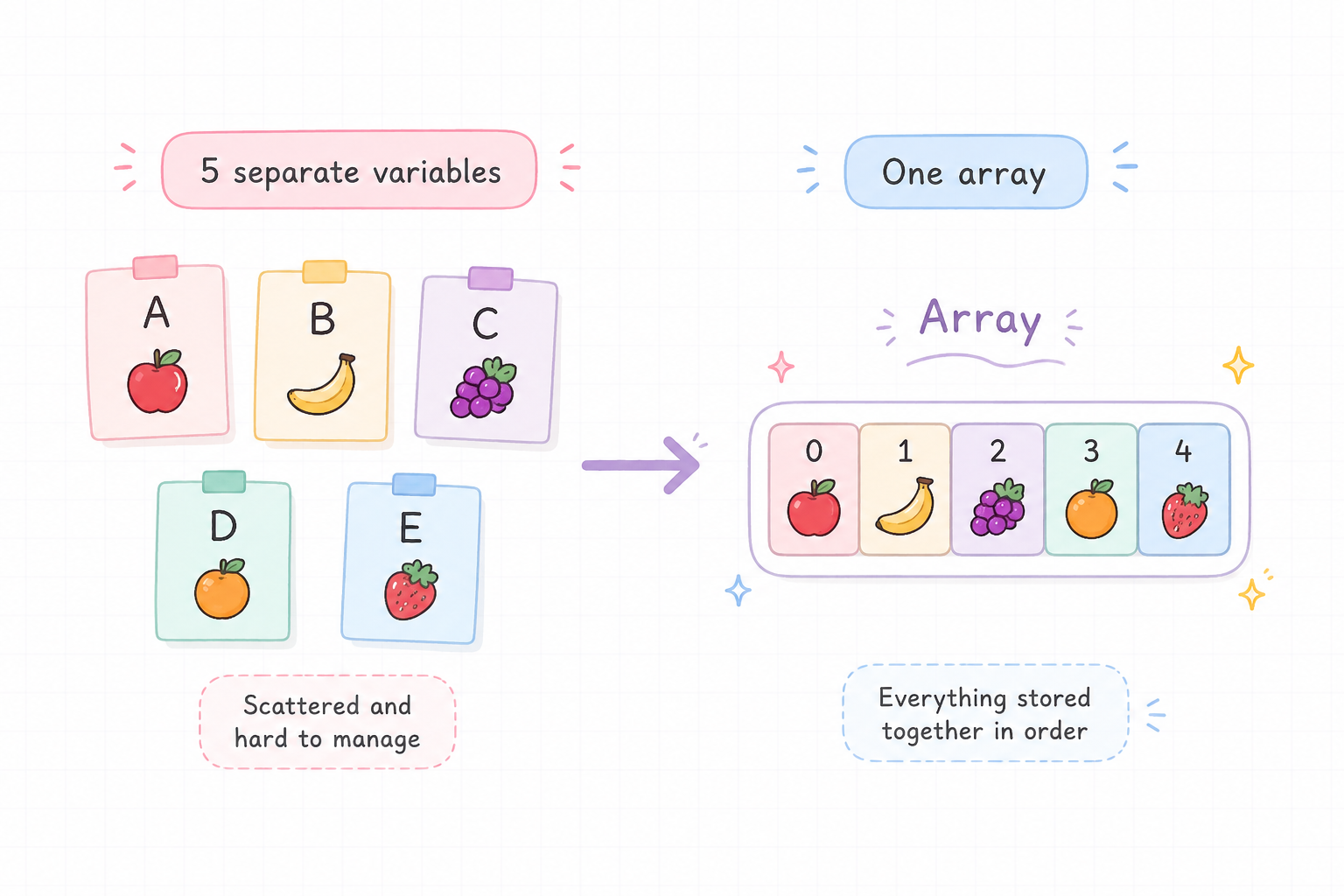
Now, here's the thing. There are so many types of data structures out there, so do we really need all of them?
Let's understand this with an analogy.
The water bottle and the glass
Imagine you have a water bottle and a glass sitting on your table. You could drink water from either one. Both work fine.

But if you're heading to the gym, you grab the bottle, not the glass. Why? It seals shut, it survives being tossed in your bag, it moves with you.
If you're just sitting at your desk though, you'd reach for the glass instead. No reason to carry a bottle for that.
Same water. Different container. Different purpose.
Now bring that into programming
It works the exact same way in code. If we want everything in order and be able to go to any data instantly, we use one type of data structure for that.
But similarly, if we want to access the last element first, we use just one type of data structure for that.
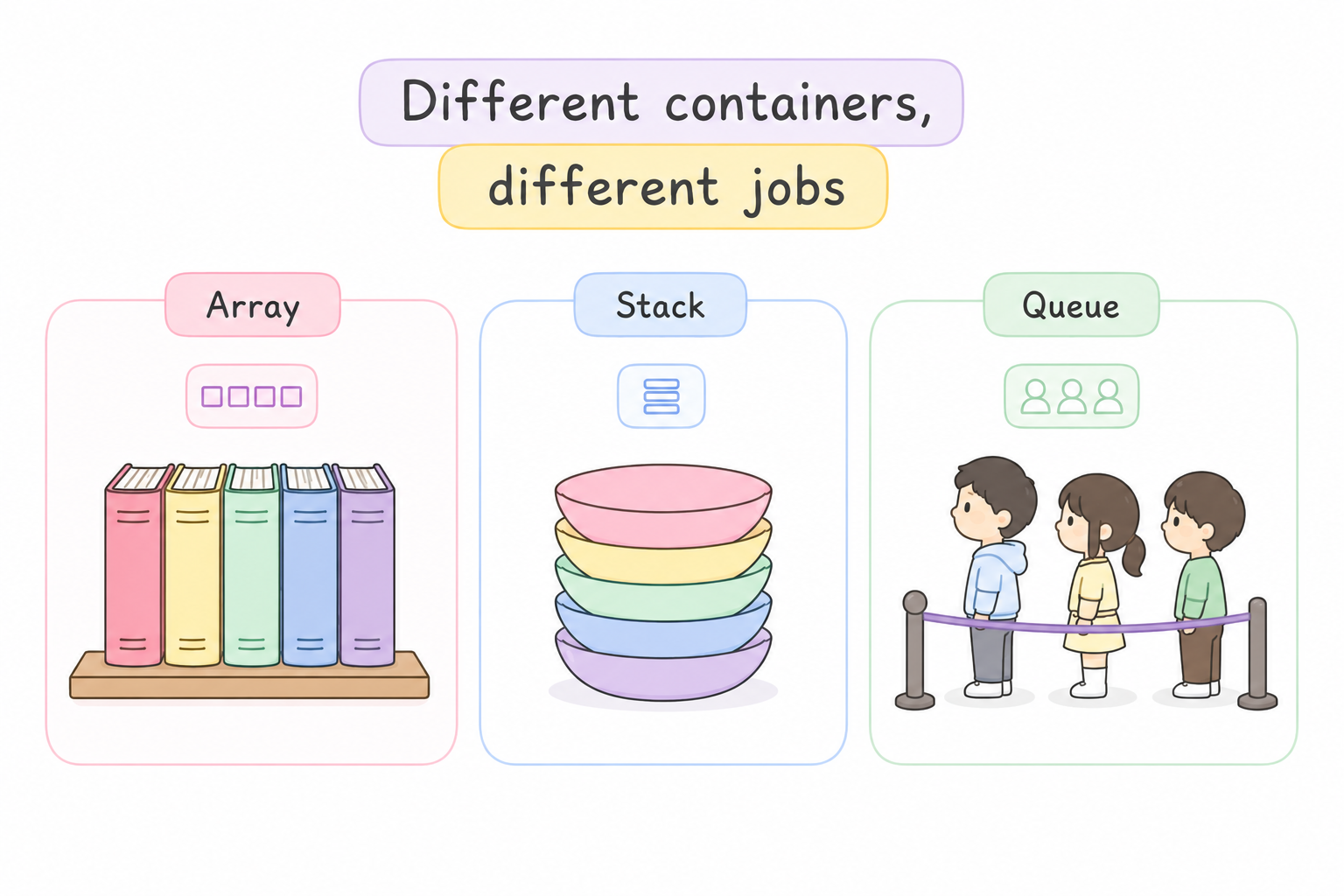
And if we want something else, then there's a type built for that too.
That is why the choice of data structure matters. A wrong structure might still work, but it'll be slow and messy. So you should always pick the right one, which you'll eventually see clearly, because we will learn every one of these in detail.
What are algorithms?
Algorithms are just a set of step by step instructions to do a task. Think about when you're cooking noodles.
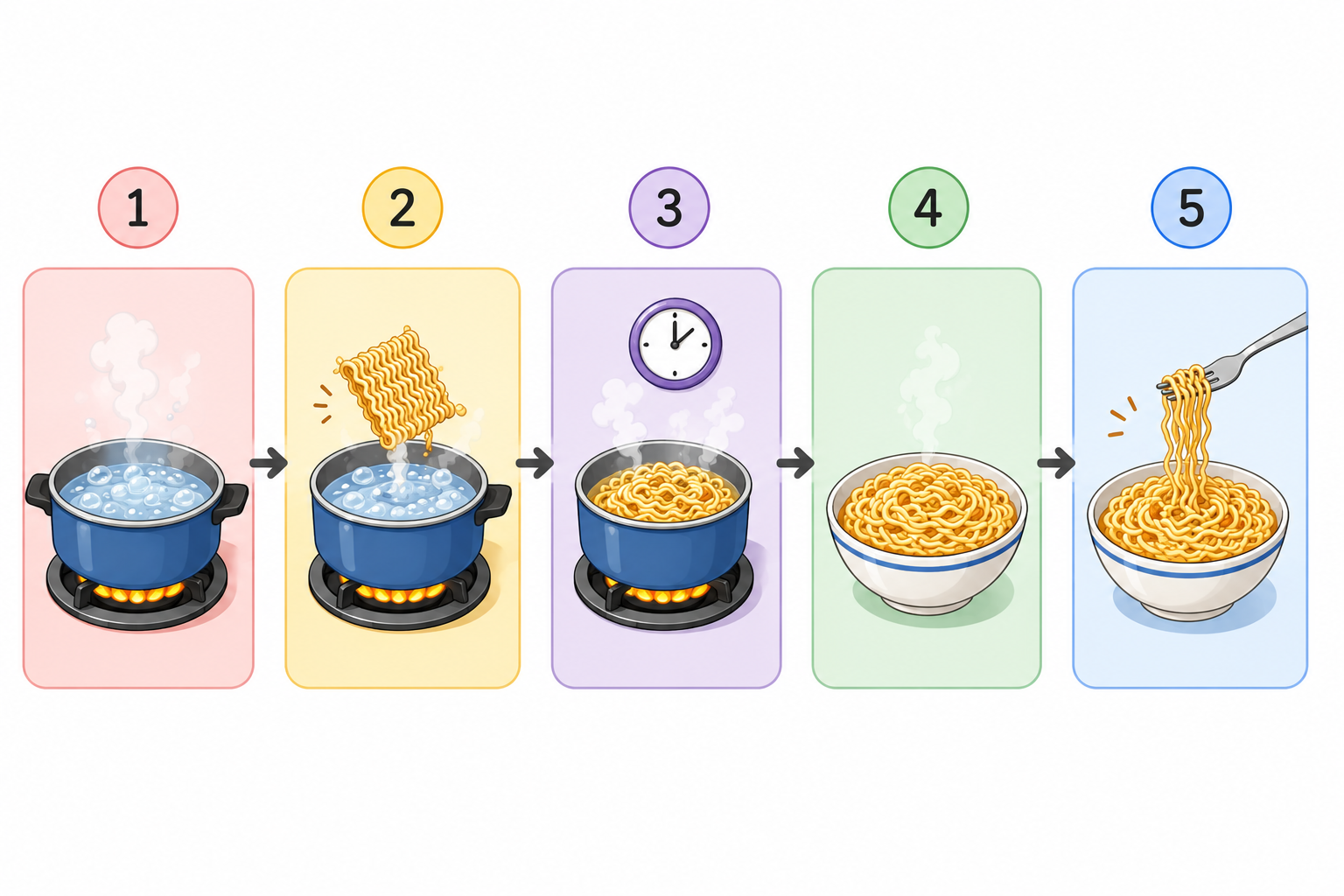
- Boil water
- Add noodles
- Wait a few minutes
- Serve it
- Eat it
That's an algorithm too.
Similar to data structures, there are multiple algorithms. So why do we need so many? Let's answer that with an example.
Think about train, bus, or plane
Say you need to travel from your city to another one. You've got three options. Train, bus, or plane.
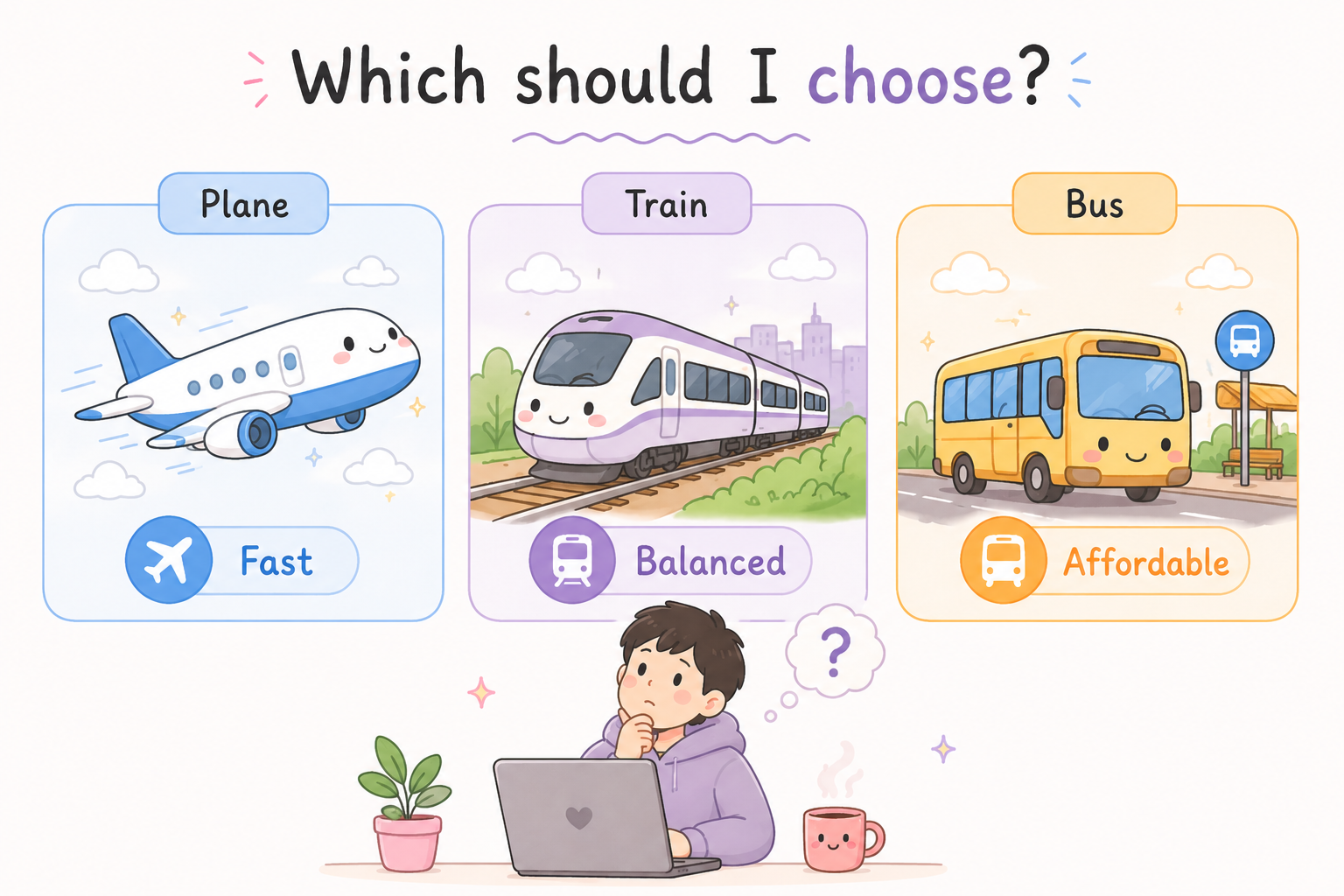
If money isn't really a concern and you just want to get there fast, you take the plane.
If you're trying to save cash and don't mind a longer ride, you take the bus.
If you want something in between, decent cost, decent time, you take the train.
None of these choices is wrong. It's just that your decision depends on what matters to you.
Algorithms work exactly like this. For the same problem, one algorithm might be fast but use more memory. Another might be slower but barely touch any memory at all. Neither one is "the best" algorithm on its own. It depends on what you're optimising for in that situation. Sometimes speed matters more. Sometimes memory matters more. You choose based on your constraints, the same way you'd choose your train, bus, or plane based on yours.
Bringing it all together
So let's recap.
Data structures are how you store and organise your data. Think of them as the container.
Algorithms are the steps you take to solve a problem using that data. Think of them as the plan.
Neither one works alone. You could pick the perfect data structure and still write a slow algorithm around it. Or you could write a brilliant algorithm and cripple it by storing your data the wrong way.
Together, data structures and algorithms work together to run a computer program.
What's next
Now you know what DSA is. Next, we will learn why we should learn DSA. Though we've touched on it a little here, we'll go into detail in the next one.